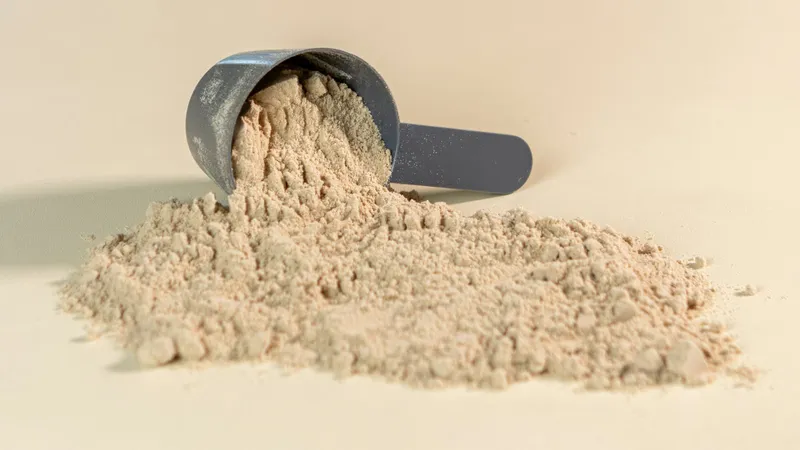
What "New Zealand oyster extract" usually means
Most products sold under this name are made from Pacific oyster (Magallana gigas, formerly Crassostrea gigas) farmed in New Zealand, freeze-dried and milled. The word "extract" is used loosely. Sometimes it means the whole dried meat, sometimes a water extract or concentrate, and sometimes a blend that includes ground shell.
None of that is a problem in itself. The problem is that the front of the pack rarely tells you which one you are buying.
Two labels, read closely
We looked at the supplement panels of two widely sold New Zealand oyster capsules, as listed by NZ and Australian retailers in October 2026:
| Product A | Product B | |
|---|---|---|
| Oyster per capsule | 350 mg freeze-dried oyster powder | 400 to 410 mg "oyster powder", listed by one retailer as 350 mg shell + 60 mg meat |
| Added zinc | Zinc oxide, equivalent to 7 mg zinc | Zinc gluconate, equivalent to 15 mg zinc |
| Zinc on the label | 7 mg | 15 mg |
Now the arithmetic. Our whole oyster meat powder tested at 2.64 mg of zinc per gram (batch 250910), which is high for oyster. At that level, 350 mg of oyster meat would carry about 0.9 mg of zinc. Pacific oyster usually carries less zinc than that. So in Product A, roughly nine-tenths of the 7 mg comes from zinc oxide. In Product B, almost all of the 15 mg is zinc gluconate, and most of the "oyster" is shell.
Side by side with whole oyster powder
| Question | Typical NZ capsule | Whole oyster powder |
|---|---|---|
| What is in it | Freeze-dried oyster, sometimes shell, plus a zinc salt | Dried oyster meat, nothing added |
| Where the zinc comes from | Mostly the added salt | The oyster: 2.64 mg per gram |
| Copper | Rarely listed | 0.24 mg per 1.2 g, a natural 13:1 zinc to copper ratio |
| Protein | Rarely listed | 59.3 g per 100 g |
| Heavy metals | Rarely published | Lot COA public: lead, cadmium, mercury, inorganic arsenic |
Freeze-dried or low-temperature dried?
Freeze-drying is a good process, and it is how many NZ products are made. Low-temperature air drying, which we use, also keeps the fat and protein intact. What matters more for a buyer is the end result on the COA: moisture, protein, fat and omega-3 tell you whether the whole animal survived processing. An extract with low protein and no fat figure did not keep the whole animal, however it was dried.
Species and origin
New Zealand products are almost all Pacific oyster. Our powder blends Sydney rock oyster (Saccostrea glomerata) and Pacific oyster from one bay in New South Wales, Australia. Species and water change the zinc, copper and cadmium figures a lot, which is why a lot-specific COA matters more than a country of origin.
Five questions to ask any oyster supplier
- Is any zinc added, and in what form?
- Does the "oyster powder" include shell? What share?
- What is the protein figure per 100 g?
- Can I see the heavy metal results for the lot I will receive, from an ISO/IEC 17025 lab?
- At my serving size, what share of the California Prop 65 lead limit is that?
Our answers: no added zinc, no shell, 59.3 g protein, the full lot COA, and 86% of the Prop 65 lead limit at 1.2 g a day. More detail is on the oyster powder page.
Questions buyers ask
Is New Zealand oyster extract the same as oyster powder?
Not always. Many New Zealand capsules contain freeze-dried oyster plus an added zinc salt, and some include ground shell. Whole oyster powder is the dried meat only, with nothing added.
Where does the zinc in oyster capsules come from?
In many products, mostly from added zinc oxide or zinc gluconate. Dried oyster meat carries roughly 1 to 3 mg of zinc per gram depending on species, so a 350 mg capsule labelled 7 mg or 15 mg zinc has had zinc added.
Which oyster species is used in New Zealand oyster supplements?
Mostly Pacific oyster (Magallana gigas, formerly Crassostrea gigas). Oyster Elements powder uses Sydney rock oyster and Pacific oyster from Jervis Bay, Australia.