Oyster powder vs New Zealand oyster extract: what is really in the capsule
New Zealand oyster capsules often pair a few hundred milligrams of freeze-dried oyster with added zinc oxide or gluconate. How to read the label, and how whole oyster powder compares.
Oyster extract dosage: how much per day, and what sets the limit
Typical oyster supplement servings run from 500 mg to 3 g a day. Zinc per gram, the 40 mg zinc upper limit and California Prop 65 lead limits set the real ceiling. Worked numbers.
Oyster powder vs oyster extract: what the label actually means
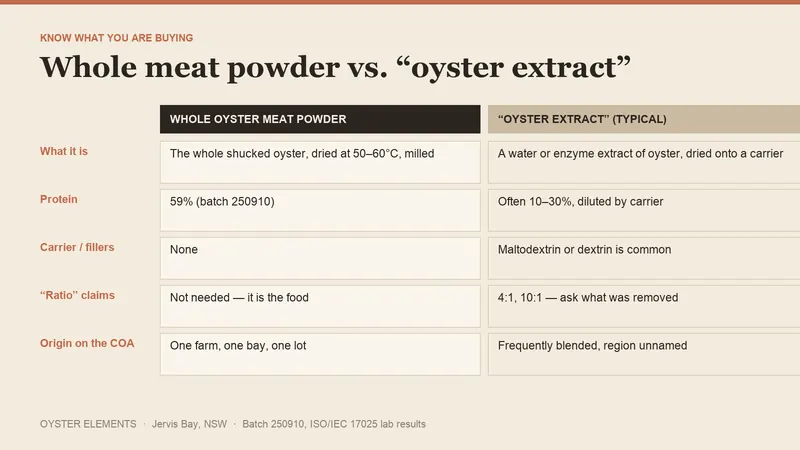
“Oyster extract” and “oyster powder” are not the same ingredient. What each one is, why the protein number gives it away, and five questions to ask a supplier.
How much zinc is in an oyster? Per oyster, per gram and per capsule
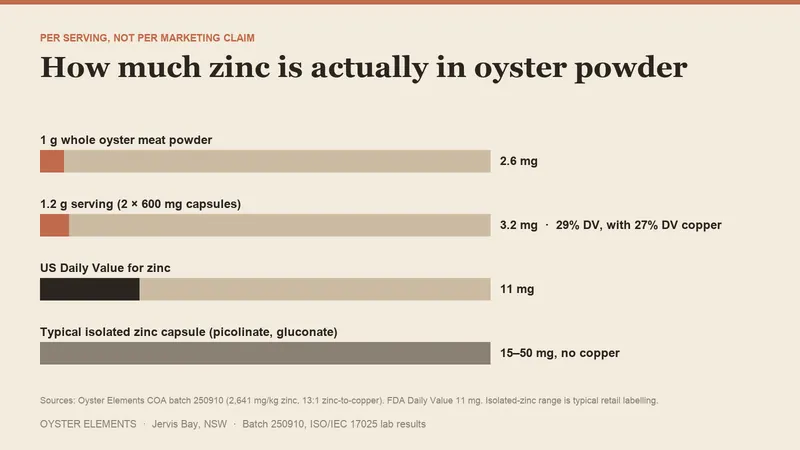
A medium raw oyster has about 5.5 mg of zinc. Whole oyster powder has 2.6 mg per gram and 3.2 mg per 1.2 g serving, with copper at a natural 13:1 ratio. Compared with raw oysters and zinc picolinate.
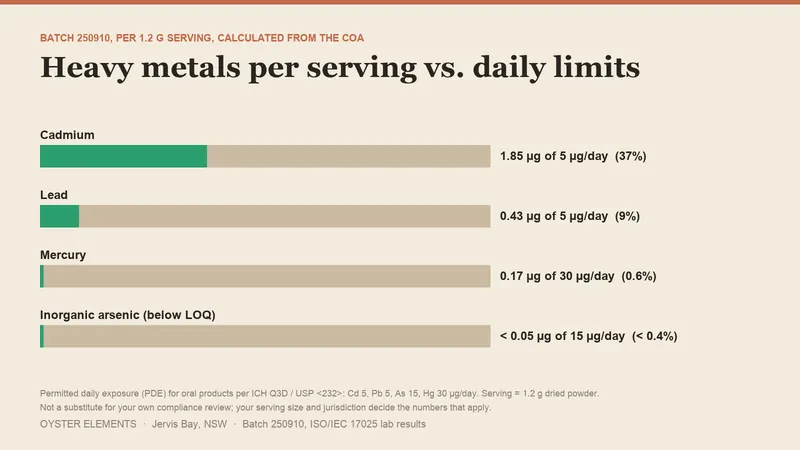
Are oyster supplements safe? Arsenic, cadmium and the real limits
Per-serving cadmium, lead, mercury and inorganic arsenic for batch 250910 set against the daily permitted exposure limits used for supplements, and how to run the maths for any product.
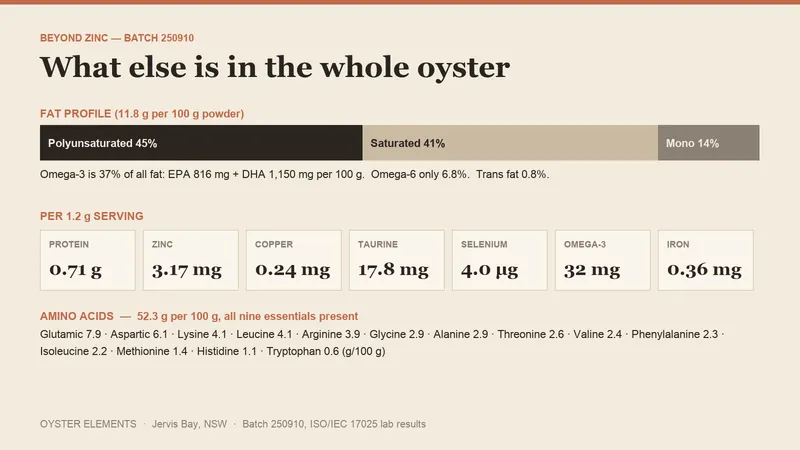
Omega-3, taurine and selenium in whole oyster: the nutrients nobody mentions
Beyond zinc, the COA for whole oyster meat powder shows 59% complete protein, omega-3 at 37% of total fat, 17.8 mg taurine per serving, selenium and iron. Honest per-serving amounts.
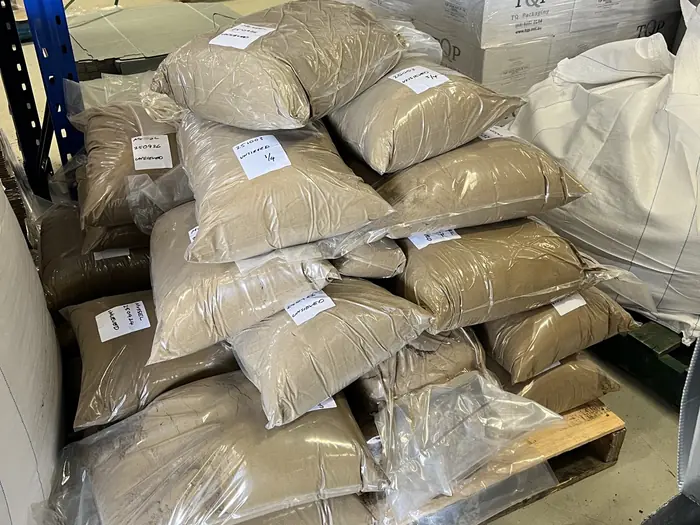
Importing oyster powder from Australia: what happens after you order
FOB terms, air or sea, the documents that travel with each lot, FDA prior notice, FSVP, duty and your broker, step by step.
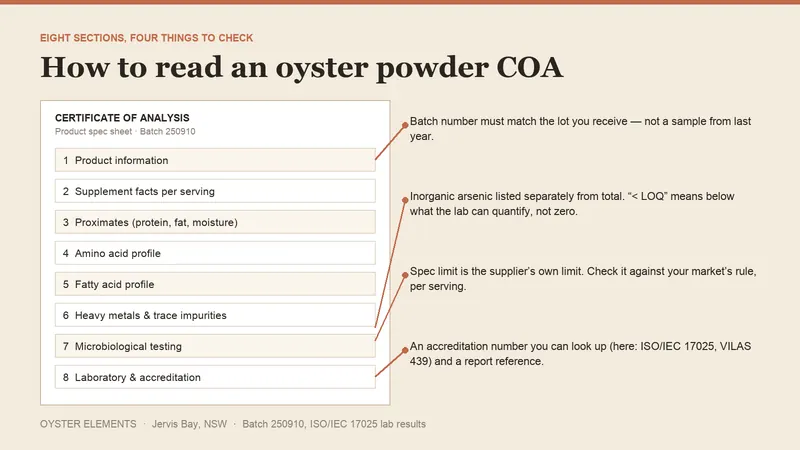
What a real oyster powder COA looks like, line by line
A Certificate of Analysis for a marine ingredient has eight sections. What each should contain, four things to check before trusting it, and where suppliers go quiet.
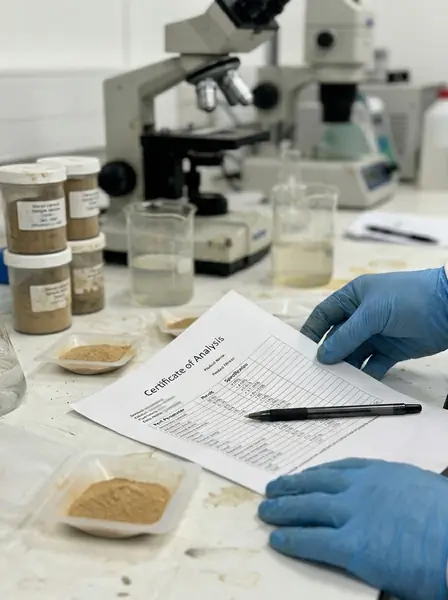
Heavy metals and microplastics in oyster powder: what buyers should actually test for
What to test for in oyster powder: inorganic arsenic, cadmium, lead, mercury and microplastics, with real ISO 17025 lab results from batch 250910, Jervis Bay NSW.
Mussel powder for pet food

Blue mussel powder compared: what each supplier actually publishes
Species, origin, protein, omega-3, metals and pathogen data for three blue mussel ingredients, side by side, and six questions to ask any supplier.
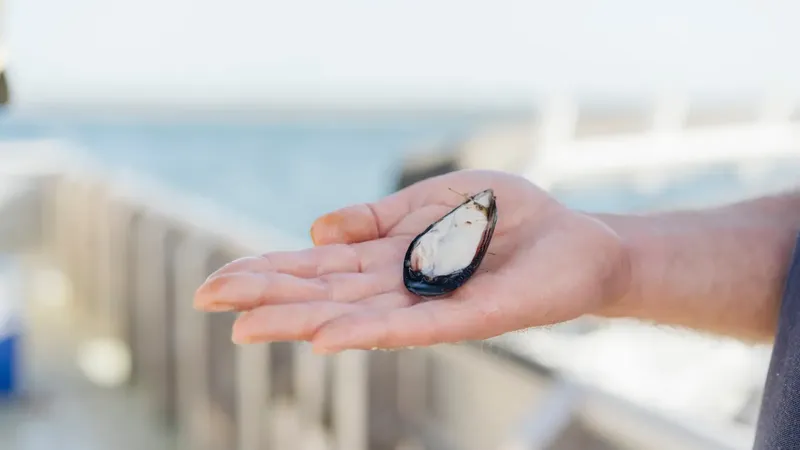
Blue mussel vs green-lipped mussel for pets: what the lab data shows
In one head-to-head analysis, blue mussel powder measured 4.83 g omega-3 per 100 g against 3.33 g for a leading New Zealand green-lipped powder, with more phospholipid and less oxidation. What that does and does not mean.

How much mussel powder for dogs? Doses by weight, and the maths behind them
Mussel powder labels commonly suggest about 0.5 g per 10 kg of body weight a day. A table by dog weight with omega-3 per serving, plus inclusion arithmetic for toppers, treats and chews.

Mussel powder vs fish oil for dogs and cats: omega-3 form, dose and freshness
Fish oil delivers about eight times more EPA and DHA per gram. Mussel powder delivers phospholipid-bound omega-3 with protein, B12 and taurine, in a dry powder format. When each one makes sense.

Mussel powder for cats: taurine, omega-3 and how brands use it
Blue mussel powder carries 1.1 g taurine and 4.83 g omega-3 per 100 g, with a marine flavour cats tend to accept. How it fits into cat toppers and lickable treats, and the numbers per serving.

How to use mussel powder in pet food: toppers, treats, chews and raw diets
A formulator's guide to blue mussel powder in pet food: six formats, inclusion arithmetic, heat and oxidation, ingredient naming, allergen labelling and claims.

Is mussel powder safe for dogs and cats? Heavy metals, microbiology and allergens
Mussels filter seawater, so heavy metals and microbiology are the questions to ask. Three-lab results for lead, cadmium and mercury, pathogen testing, allergens, and what to ask any supplier.
Two free reports, one for each market
The oyster opportunity for supplement brands, and the mussel opportunity for pet food brands. 14 pages each, with lab data and a 90-day roadmap.